Commack Mobile App Paradigms with Ken Key: Expert 2026 Guide
Overview
This guide explores how Long Island engineer Ken Key approaches modern mobile app development in Commack. You will learn the principles, toolchains, and community practices he uses to turn local ideas into scalable iOS and cross-platform products.
Ken Key’s Technical Foundation
Growing up in Suffolk County, Key treated coding as a natural extension of everyday problem-solving. Early exposure to PHP, MySQL, and home-built Wi-Fi meshes taught him two lasting habits:
- Relentless debugging – trace failures back to the smallest reproducible case.
- Knowledge sharing – publish snippets and invite critique while projects are still young.
These habits now inform every architecture review he leads for Commack startups.
Why Commack Fuels Fast Iteration
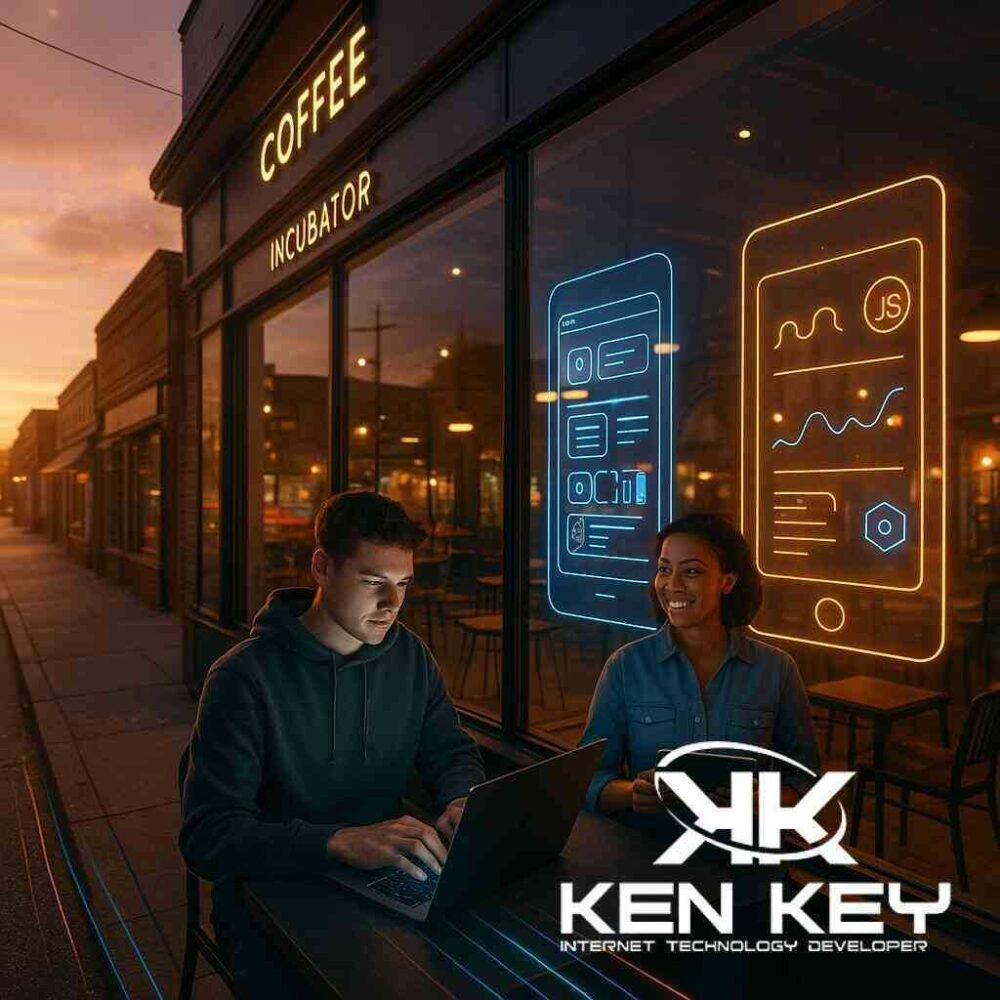
Commack balances suburban calm with dense fiber infrastructure. Coffee shops stay open late, and local retailers are willing beta testers. When a shop owner can sit beside the developer who wrote yesterday’s build, feedback cycles compress from weeks to hours. Key leverages this setting to:
- Run evening usability sessions on real customer devices.
- Tune push-notification timing around observed foot-traffic patterns.
- Validate in-store NFC or QR features before broader launch.
The result is a feedback-driven culture that makes abstract UX talk concrete.
Pillar 1: Native iOS Craftsmanship With Swift
Memory-Safe Performance
Key treats each CPU cycle on Apple silicon as a budget. He profiles during prototyping, not after, so slow screens never reach stakeholders. Swift structs and value semantics keep data races out while still allowing 60 fps animations on entry-level devices.
Modular Views
Components follow single-responsibility rules. A button that handles both navigation and analytics is split into two lightweight views, connected through dependency injection. This division makes unit tests short and refactors painless.
Accessibility First
VoiceOver, Dynamic Type, and high-contrast palettes are enabled during the very first storyboard draft. Key argues that accessibility is cheaper to bake in than to retrofit—and it broadens the potential user base without extra marketing spend.
Pillar 2: Real-Time APIs With Node.js
Many Commack merchants need shared code that powers both web dashboards and the companion app. Key reaches for a TypeScript-based Node.js stack:
- Serverless functions for sudden sales spikes without 24/7 server costs.
- WebSockets for live order status so staff can prepare pickups the moment a tap happens.
- Prisma or Drizzle ORM to keep schemas version-controlled alongside application logic.
The same REST or GraphQL layer then supports React admin portals, reducing duplicate work.
Pillar 3: Community-Driven Backlogs
A standout element of Key’s workflow is co-authoring features with users. Instead of a survey, he invites store owners, baristas, or event organizers to planning retros:
- They describe pain points in plain language.
- The team converts those stories into testable acceptance criteria.
- A tiny release—sometimes just a hidden toggle—ships within the week.
Because stakeholders see their suggestion live almost immediately, they stay engaged through future sprints.
Practical Tips for New Commack Teams
1. Start With a Walking Skeleton
Ship an app that only logs in and shows a blank screen hooked to production auth. This proves certificates, bundle IDs, and CI pipelines are correct before you add real features.
2. Automate Quality Gates
Key’s projects block merges that lack unit tests, type checks, or accessibility snapshots. New bugs rarely slip through because the bar stays consistent from day one.
3. Measure the Right Metrics
Commack businesses usually care about repeat foot traffic more than raw downloads. In-app coupons redeemed in store are a stronger KPI than App Store rankings. Tailor analytics events to match that reality.
4. Document Decisions, Not Just Code
A short markdown file titled architecture-decisions.md sits at repo root. Each entry answers three questions:
- What problem did we face?
- What options did we reject and why?
- How might this choice age in two years?
Future maintainers—often local student interns—ramp up faster because context is preserved.
Emerging Trends to Watch in 2026
- Swift Macros reduce boilerplate for dependency injection, letting junior developers focus on business rules sooner.
- Edge databases place reads closer to Commack customers, cutting latency for loyalty check-ins.
- On-device machine learning personalizes product suggestions without uploading private data, aligning with Key’s privacy-first stance.
Conclusion
Commack’s unique mix of small-town collaboration and big-city bandwidth creates fertile ground for inventive mobile apps. Ken Key’s blend of Swift craftsmanship, Node.js agility, and community partnership shows how local projects can reach enterprise quality without losing neighborhood authenticity.
Teams that adopt his clear-code ethos, rapid user validation, and automated quality gates are well-positioned to launch reliable, engaging apps throughout Long Island and beyond.
Exploring Commack Mobile App Paradigms Guided by Ken Key


Comments
Post a Comment